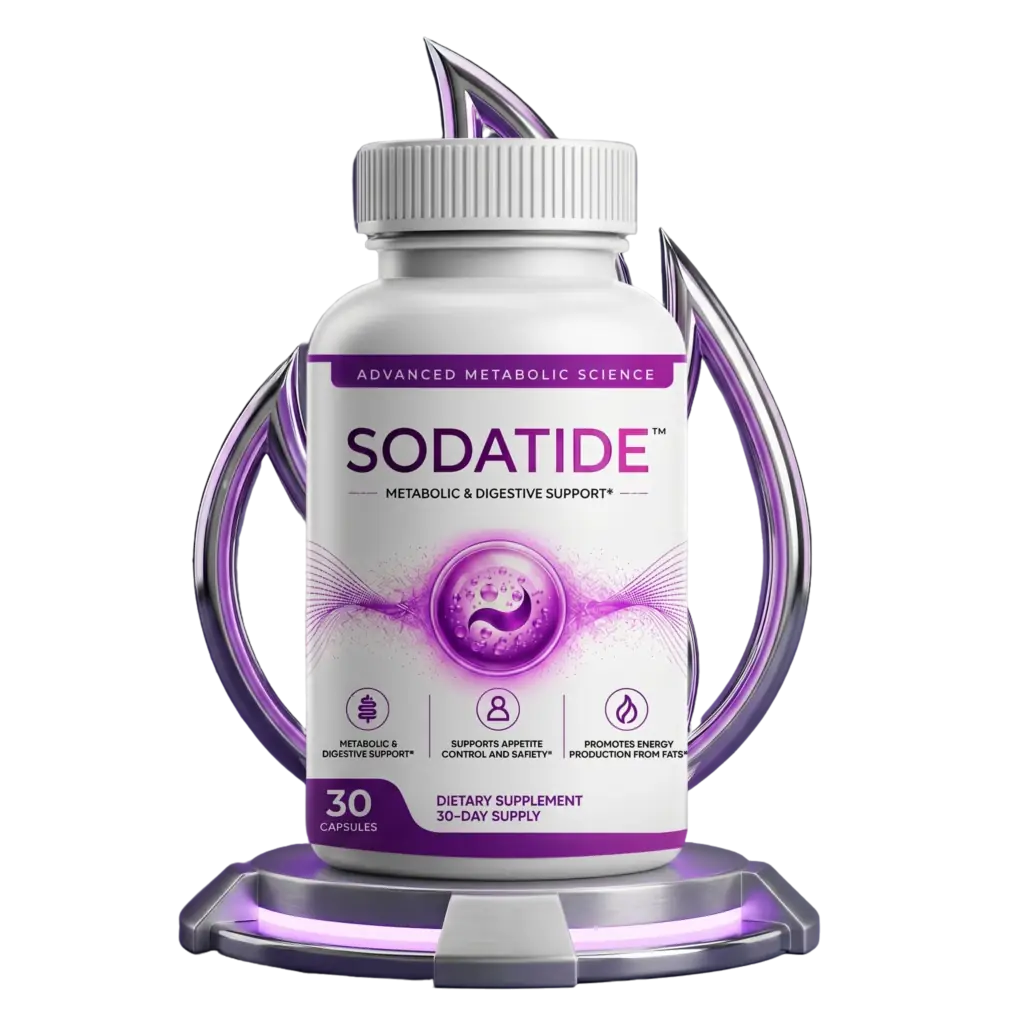
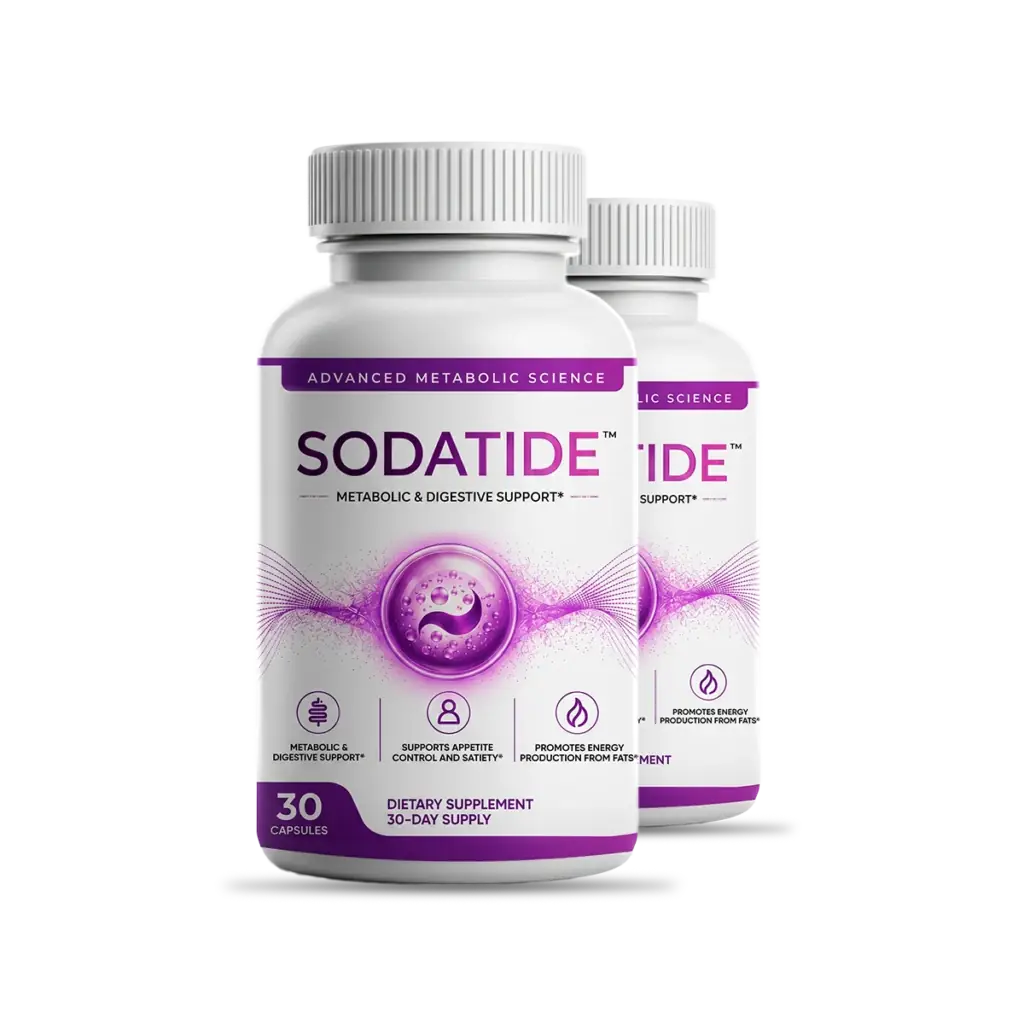
Two Bottles
60 days · 60 capsules$158 in total
Listed against $158 — the same number you pay, so this tier shows no reduction at all.
- 2 bottles of 30 capsules
- $9.99 US shipping on top
- 60 days to ask for your money back
- Charged once, no rebill
Seven areas the product is positioned around, each written responsibly and each checked against the label — then a plain list of the things it does not do.
Every heading below is framed as support, which is the strongest thing either the evidence or the law permits for a food supplement. None of them is a guarantee.
This is not a treatment for any digestive disorder or medical condition, it is not intended to diagnose, treat, cure or prevent disease, and it is for healthy adults of 18 and over. Individual results may vary.
Of the claims made for this product, this is the one that stands on the firmest ground.
Fibre feeds the bacteria in your colon and probiotic strains add to their number. Those two levers are the ones most used, and most studied, for regularity and day-to-day gut comfort. Neither is speculative.
Expect an adjustment period. Wind or bloating in the opening week is the normal response to introducing prebiotic fibre, it is not a sign of anything going wrong, and it typically settles. The source says so openly rather than burying it.
The reservation is size. 311 mg of fibre sits against a literature written in grams. Live organisms are a separate argument — they can matter at tiny weights — but with no count published there is nothing there to evaluate either.
What the panel supports
This heading needs the most careful handling, though to its credit the source handles it carefully already — it talks about metabolic energy use, not fat loss.
The genuine research: short-chain fatty acids from fibre fermentation are studied alongside glucose handling and the hormones that govern fullness. Resistant starch has reasonable trial evidence for insulin sensitivity. Akkermansia muciniphila sits close to the centre of current metabolic microbiome work.
What that does not license: concluding that 347 mg once a day reproduces any of it. The fibre studies ran at 5 to 30 grams daily, and the Akkermansia work uses defined organism counts this product does not publish.
Nothing here is a weight-loss product or a treatment for a metabolic condition, and the source does not pretend otherwise.
The claim with the shortest distance between assertion and evidence.
Inulin very nearly is the textbook definition of a prebiotic — it selectively feeds Bifidobacteria, shown repeatedly in controlled human work. Resistant starch is among the better butyrate producers available. Both are defensible picks.
Combining them is the smartest call in the formula. Inulin ferments early and fast; resistant starch travels on and ferments later. Using both spreads the feeding along the colon instead of dumping it in one place. That is formulation thinking, not copywriting.
What limits it is arithmetic. 311 mg between them is a fraction of what the studies used, and around one-fortieth of what a bowl of beans delivers.
Read properly, this is about fullness signalling and not about suppressing hunger. There is no appetite suppressant in the formula, and the source describes it as supporting natural appetite signals rather than switching them off — a distinction that deserves respect.
Two documented mechanisms sit behind it. Fibre physically slows the stomach emptying, and the fatty acids produced by fermenting it are linked with the release of satiety hormones.
Both mechanisms scale with bulk, which is the difficulty. Fibre makes you feel full partly by occupying space, and 311 mg occupies almost none. A serving of oats does far more on this specific mechanism than any capsule can.
As a small daily addition to a diet that already contains fibre, the reasoning holds. As a substitute for that fibre, it does not.
The most scientifically interesting part of the product, and the part it is least possible to assess.
The three organisms are sensibly chosen and they fit the fibres they travel with. Clostridium butyricum makes butyrate, which is precisely what fermenting the fibre is meant to achieve. Akkermansia muciniphila inhabits the mucus layer and is researched for the integrity of the gut wall. Bifidobacterium infantis has respectable evidence behind particular strains in irritable bowel syndrome.
Naming all three beats what most blends disclose, and the source is right that Akkermansia is uncommon on a shelf.
But 36 mg is a weight, not a population. No colony count is published and no strain codes are given — and probiotic effects are strain-specific, so without those codes there is no study to compare against. The organisms can be described; the dose cannot be judged.
Left out of this site
Plainly true, and worth stating without hedging.
One capsule with water, once a day. Nothing measured, nothing mixed, no doses split across meals. For a product whose entire case rests on gradual accumulation, the ease of actually keeping it up is not a minor selling point — it is the thing that determines whether anything happens at all.
There is also nothing stimulating in it. No caffeine, nothing thermogenic, no reason it would affect sleep or produce a mid-afternoon dip — which matters for anyone avoiding stimulants because of anxiety, a heart rhythm issue, or medical advice.
The format does introduce one snag: the label wants it refrigerated, which makes it less portable than something you could keep in a bag. Worth weighing before committing to six months of it.
The six above, drawn together, with the marketing stripped out.
You get a convenient daily vegetarian capsule holding 211 mg of chicory root inulin, 100 mg of potato resistant starch and 36 mg of a three-strain probiotic blend, with every organism named on the panel. The choices are sensible, the two-fibre pairing reflects real thought, and Akkermansia muciniphila is an unusual thing to find in a retail formula.
What you do not get is fibre at a researched quantity. That is not hidden from you — it is printed on the bottle — and it follows from physics rather than from any intent to mislead. Five grams of inulin will not fit inside a capsule.
Where that lands: as a modest daily synbiotic habit sitting alongside a diet that already contains fibre, this is a reasonable thing to consider, and the material around it is more honest than most. As a replacement for dietary fibre, or as a treatment for a digestive condition, the label will not carry it.
A benefits page carrying only benefits is an advert wearing a disguise.
This is a food supplement, not a treatment for anything. The source repeats that itself, correctly. It does not treat irritable bowel syndrome, inflammatory bowel disease, obesity, diabetes or any other diagnosed condition.
Some symptoms belong to a doctor and not to a capsule, and it is worth being precise about which. Weight falling off without explanation, abdominal pain that does not let up, blood in your stool, a change in bowel habit that persists, or trouble swallowing all need looking at properly. So does fatigue that will not shift — anaemia, thyroid disease, coeliac disease, diabetes and sleep apnoea are all on that list and all findable with a blood test.
Prebiotic fibre cannot tell ordinary bloating apart from something that needs investigating. A doctor can.
The material behind this site is unusually frank about a gap in its own reporting. It says the official SodaTide website could not be reached, that its product details came from a third-party review and from the packaging, that it was unable to check the formula against an official label, and it asks readers to confirm things against the bottle in their hands.
The bottle was available here. Its Supplement Facts panel closes the gap, and this is what it prints:
Beneath the blend the panel names its three organisms: Bifidobacterium infantis, Clostridium butyricum and Akkermansia muciniphila.
Why the numbers change everything. An ingredient list on its own cannot be argued with, because there is nothing in it to measure. Put amounts beside it and the question answers itself: the inulin here is somewhere between a twenty-fifth and a fiftieth of a researched prebiotic dose, and the resistant starch between a hundred-and-fiftieth and a three-hundredth of one.
None of this is hidden from anybody — it is printed on the bottle for anyone who turns it round. It is a limit of the format rather than an act of concealment: fibre takes up room, and grams of it will not go into one swallowable capsule. A bowl of porridge, a pear, a ladle of beans — each delivers fermentable fibre by the gram. Hold that thought when you weigh up what a single daily capsule can plausibly do.
You will see this formula described as having six ingredients, itemised as chicory root inulin, potato resistant starch, probiotic blend, Bifidobacterium infantis, Clostridium butyricum and Akkermansia muciniphila.
The last three are what the third one contains. They are the organisms inside the probiotic blend, not additional ingredients sitting next to it, so listing them separately tallies the same 36 mg twice over.
The label removes any doubt. Its panel carries three declared lines — the two fibres and the blend — with the strain names set indented underneath, exactly the convention used whenever a blend is broken out into its parts.
It is a slip in arithmetic rather than a dishonest claim, and an easy one to make. But six sounds like twice the formula that three does, so this site counts three from beginning to end and puts the strains where they belong.
The blend is declared the only way a label can declare a mixture: by weight, 36 mg. It is also the one line on the panel that tells you nothing useful.
Live cultures are counted, not weighed. The unit is colony forming units — how many viable organisms actually go down with the capsule. A milligram figure describes the powder, and probiotic powder is mostly the carrier the organisms are suspended in. Two products could both declare 36 mg and differ by a factor of thousands in what is alive inside them, with nothing on either label to tell them apart.
Published probiotic trials generally work somewhere between one and fifty billion CFU a day, and they report that figure because it is the one that governs the result.
So where does that leave a buyer? Three named organisms is better disclosure than most blends offer. How much of them you are getting is unknowable from anything published — which makes it a reasonable thing to ask the seller before committing to half a year's supply.
The references are real ones: a PubMed Central paper on chicory inulin as a prebiotic fibre, a PubMed record on Akkermansia muciniphila and the gut barrier, and a general piece on resistant starch. Nobody has fabricated a study here.
The source also supplies the caveat itself, in its own words: these citations concern research on individual ingredients rather than the finished product. No trial has ever been run on this capsule.
The part citations cannot cover is quantity. That literature was built on grams a day of fibre, against 347 mg of everything in here. The papers explain why somebody would choose these ingredients. They do not show that this capsule delivers what the papers found.
Tucked into the usage advice is a line that deserves far more prominence than it gets: eat a varied, fibre-rich diet alongside the capsule. Here is why it matters more than anything else on the page.
Almost nobody eats enough fibre. Guidance lands somewhere around 25–38 grams a day depending on who you are; actual intake across many countries runs at roughly half of that. Closing that gap moves precisely the things this product is positioned around — how regularly you go, how comfortable you feel afterwards, how full you stay, and how steeply blood sugar climbs after eating.
Some numbers for scale. A cup of cooked lentils or beans: somewhere near 12–15 grams. An unpeeled pear: about 5. A bowl of oats: roughly 4. A potato cooked and then cooled — the same raw material this product's resistant starch is drawn from — yields resistant starch measured in grams.
Set against that, 311 mg of fibre is a rounding error. This is not an argument that the capsule is pointless; a dose of live organisms is a different proposition from a dose of fibre and cannot be dismissed the same way. It is an argument that nothing in a capsule stands in for food, and that anyone buying this hoping for digestive benefit would get further, faster, by putting beans, oats, fruit and vegetables on the plate.

Three sizes, with the comparison figures unpacked rather than repeated.
$158 in total
Listed against $158 — the same number you pay, so this tier shows no reduction at all.
Listed against $474 → $294 in total
A gap of $180
Listed against $237 → $207 in total
A gap of $30
Where $158, $237 and $474 come from. Divide each by its bottle count and the answer is always $79 — the price you would pay per bottle on the smallest bundle. These are not old retail prices that somebody once charged; they are the entry rate carried across each pack size, and the source describes them openly as third-party reference figures. That is a considerably more restrained way to display a discount than the invented recommended-retail numbers this category usually reaches for. The consequence is that the genuine gaps are small: nothing on two bottles, $30 on three, $180 on six. Shipping is included on the three- and six-bottle packs and costs $9.99 on the two-bottle pack. Checkout sets the live price and can change it, so treat the official order page as the last word.
Two months from the day you buy. If the product falls short of what you hoped for, you ask customer support for your money back inside that window. The order is a single charge with nothing recurring behind it.
No minimum trial period is attached to this offer as it is described here — other pages about this product do attach one, and that condition has not been carried across. Check the live refund policy before you buy, since these terms belong to the seller and can be revised.
The window is fixed at 60 days. What you buy may last far longer than that.
Write the purchase date down. Two things nobody publishes: who covers return postage, and whether an opened bottle can go back.
Start on the ingredients page. The per-capsule amounts and the three strain names there were read straight off the bottle — the very check the source material tells its readers to run for themselves. Those numbers are what should decide this, not the packaging.
$49 a bottle at the lowest · 60 days to change your mind · One capsule daily